

Fresh Royal Jelly 101: Benefits, Dosage, and How to Use It
Oct 16, 2026
Most jars labeled "royal jelly" on store shelves have sat in warehouses for months, their potency quietly fading before you ever twist off the cap. That's a real problem if you're counting on this bee superfood for immune or hormonal support. Fresh royal jelly is a different product entirely — alive with 10-HDA and nutrients that degrade fast without proper cold handling. Here's what separates the real thing from the rest, and how to spot a source you can actually trust in 2026.
What Is Fresh Royal Jelly
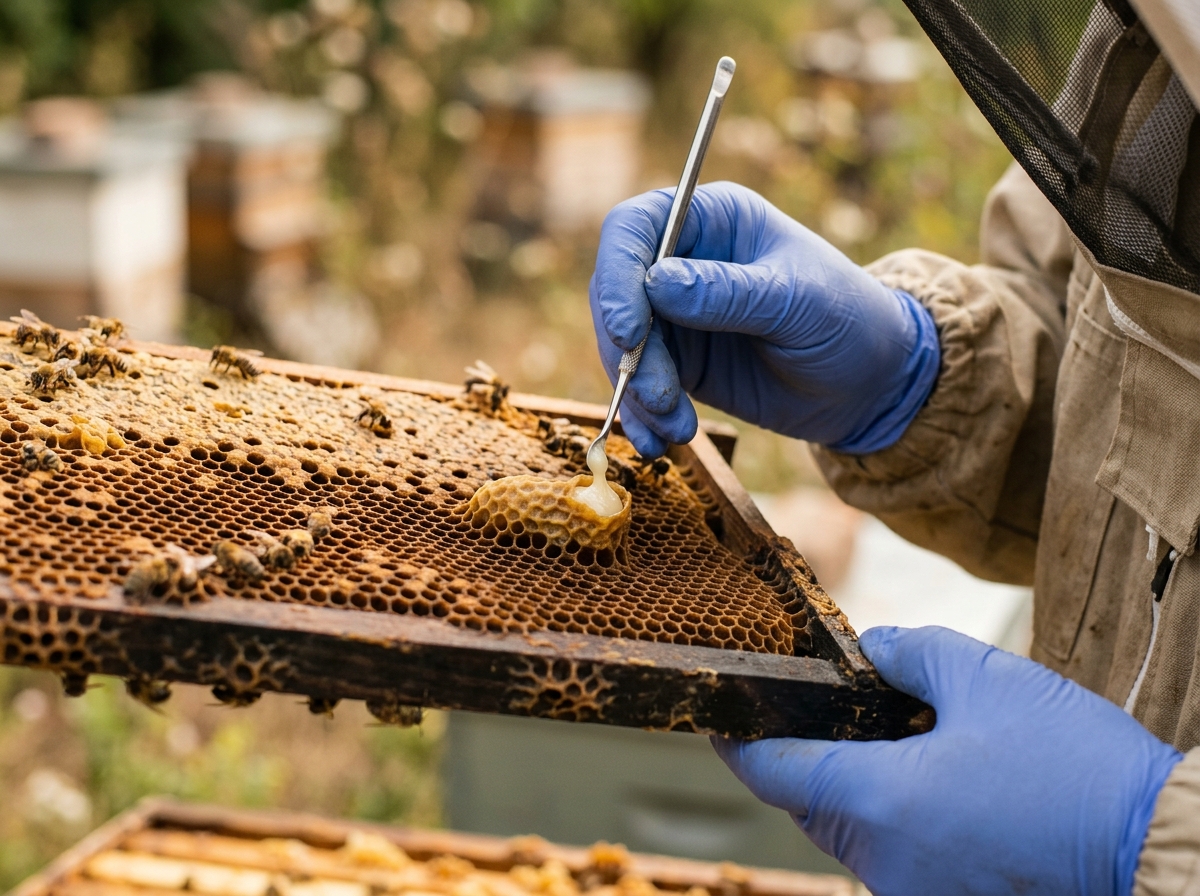
Royal jelly is a milky secretion made by young nurse bees, produced in glands on the sides of their heads. The colony feeds it to every larva for the first few days of life. Then it's poured on the queen, for her entire life. That steady diet is what turns an ordinary egg into a queen rather than a worker. It's a strange, potent substance, and bees make it fresh, on demand, for one purpose: growth.
Fresh vs. Freeze-Dried: Why the Distinction Matters
Fresh royal jelly means exactly what it sounds like: it was never dehydrated, never freeze-dried, never reduced to a powder. It's pulled from the queen cells raw, then kept cold — refrigerated or frozen — from the moment it leaves the hive until it reaches your spoon. No heat, no drying chamber, no processing step in between. That's a meaningfully different product from what most shelves carry.
Walk through any supplement aisle and you'll mostly find powdered, encapsulated, or lyophilized royal jelly — shelf-stable, yes, but altered by the drying process. Some compounds degrade under heat or vacuum-drying, even gently. Fresh royal jelly skips that entirely, which is why it's typically sold frozen or deep-chilled rather than sitting in a bottle at room temperature. Reading up on the broader benefits of fresh royal jelly helps explain why so many naturopathic protocols specify the raw form over capsules. Freeze-dried powder still has its place — more on that tradeoff elsewhere — but it isn't the same substance.
What the 10-HDA Percentage Tells You
If you're comparing jars, 10-HDA is the number to look at. Short for 10-hydroxy-2-decenoic acid, it's a fatty acid found almost nowhere else in nature except royal jelly. Labs use it as the industry marker for both potency and freshness, since levels can vary widely depending on hive health, harvest timing, and how the jelly was handled afterward. No 10-HDA figure on the label? That's a red flag, not an oversight.
Quality raw royal jelly generally falls somewhere between 1.5% and 3% 10-HDA, with anything above 2% considered strong. A Premium raw organic jelly testing at 2.1%+ 10-HDA sits comfortably in that higher range, while a never-frozen Limited Edition batch testing at 2.3%+ pushes further still, reflecting hives in California and New Jersey harvested and chilled without ever touching a freezer cycle. The percentage isn't marketing fluff — it's a lab result, and it's the clearest way to judge whether what you're buying actually behaves like royal jelly or just looks like it.
How Royal Jelly Is Made and Harvested
Why Bees Produce It Only for Queens
It starts with nurse bees, the younger worker bees inside the hive. They eat pollen and honey, and their bodies do something remarkable with it: special glands behind the brain, called hypopharyngeal and mandibular glands, convert those raw nutrients into a thick, milky secretion. That's royal jelly. It's not gathered from flowers or stored like honey. It's made fresh, on demand, from the bee's own body.
Every bee larva gets a taste of it for the first few days of life. But only one gets it for life: the queen. She's fed royal jelly exclusively, from larva to death, and it's a huge reason she outlives her worker sisters by years instead of weeks. That gap has driven a fair amount of scientific curiosity, including research into royal jelly fertility connections and reproductive health. Queens, by the way, aren't just longer-lived — they're wildly more fertile too, laying up to 2,000 eggs a day at peak season.
That queen-only diet is also the reason royal jelly carries a certain mystique. Royal lineage shows up in plenty of unexpected places, even outside the hive — family trees and inherited titles fascinate people everywhere, as this family tree complete guide to BJJ's royal family shows in a completely different context. In bees, though, the "royal" status isn't born. It's fed.
Fresh Royal Jelly vs. Other Forms: Powder, Capsules, and Bulk
Not every format fits every life. Someone juggling travel, a strong sense of taste, or a wholesale order has different needs than someone spooning jelly straight from a jar at home. Form matters as much as freshness once you move past the basics of what royal jelly is.
Fresh, raw jelly keeps the most nutrients intact, but it's demanding. It needs a fridge, it has a short shelf life, and the flavor is sharp — sour, a little bitter, not for everyone. Honestly, royal jelly is not for the taste, it's for what it delivers. Freeze-dried powder solves the portability problem: it's shelf-stable, 3x concentrated (6%+ 10-HDA versus roughly 2%+ in fresh jelly), and dissolves into smoothies or cold foods without refrigeration. Royal jelly capsules are sold elsewhere for pre-dosed convenience, but Go Honey's freeze-dried powder achieves that same shelf-stable goal in a different way — you're just measuring with a spoon instead of swallowing a pill. Bulk premium jelly, meanwhile, is built for retailers or households going through larger volumes regularly.
| Form | Potency | Storage | Best For |
|---|---|---|---|
| Fresh raw jelly | 2.1%+ to 2.3%+ 10-HDA | Refrigerated, short shelf life | Maximum nutrient retention |
| Freeze-dried powder | 6%+ 10-HDA (3x concentrated) | Shelf-stable, no fridge needed | Travel, smoothies, taste-sensitive users |
| Capsules (sold elsewhere) | Varies by brand | Shelf-stable | Pre-dosed convenience |
| Bulk premium jelly | 2.1%+ 10-HDA | Refrigerated or frozen | Retailers, high-volume personal use |
So which do you pick? It comes down to three questions: how well you tolerate the taste, whether you're traveling or staying put, and whether you'd rather dose by spoon or capsule. There's no wrong answer. There's just the one that actually gets used.
Potential Benefits of Royal Jelly
Energy, Immunity, and Skin Health
Royal jelly isn't a sugary snack for the queen bee. It's a dense, milky secretion loaded with proteins, B-vitamins, amino acids, and fatty acids — including 10-HDA, a compound found nowhere else in nature. That's the marker labs test for when they verify potency. People reach for it hoping for steadier energy, a stronger immune response, and better skin tone, and the nutrient profile gives a plausible reason why.
Here's what the broader body of research actually points to so far:
- Several lab studies suggest royal jelly has antioxidant and anti-inflammatory activity, which may help the body manage everyday cellular stress.
- Specific royal jelly proteins have been linked in some studies to modest support for healthy cholesterol and blood pressure levels.
- Early research points to possible blood sugar regulation, theorized to work through a reduction in oxidative stress rather than direct insulin activity.
- Small studies and animal models associate royal jelly with faster skin repair, general immune support, and relief from some menopause-related symptoms.
- Its amino acid and B-vitamin content is why many people take it as a daily energy and wellness supplement rather than an occasional remedy.
What the Research Does and Doesn't Show
Now, the honest part. Most of this evidence comes from small human trials or animal studies, not large clinical research. A comprehensive rundown of Potential Health Benefits of Royal Jelly makes the same point: promising signals, but not proof. That doesn't mean it's useless. It just means royal jelly is a supplement, not a substitute for medical treatment or prescribed medication.
If you're managing a chronic condition, talk to your doctor before adding it to your routine. Think of it as a daily nutritional add-on with early, encouraging data behind it — not a cure, not a miracle, just a well-studied bee product worth watching as more research comes in.
How to Take, Store, and Dose Fresh Royal Jelly
Recommended Serving Size and Frequency
Keep it simple. A typical serving is 1/4 to 1/2 teaspoon, taken straight off the spoon or stirred into cold water, juice, or yogurt. Traditional use favors first thing in the morning, on an empty stomach, but there's no strict rule carved in stone here. What actually matters is showing up daily. Most people take it for several weeks before they notice any real shift, so consistency beats clock-watching every time.
One hard rule, though: never drop it into hot tea, coffee, or warm food. Heat breaks down the enzymes and active compounds that make fresh jelly worth taking in the first place. If you're curious about the research behind these compounds, it's worth reading what a registered dietitian says about royal jelly before building a routine around it. Cold or room-temperature only.
Storage: Fridge, Freezer, or Pantry
Storage depends on the form you bought. The table below breaks down what works for fresh jelly versus freeze-dried powder, since treating them the same is a common mistake.
| Form | Best Storage | Shelf Life | Notes |
|---|---|---|---|
| Fresh royal jelly, short-term | Refrigerator (32–39°F) | 3–6 months | Keep lid tight; light and air degrade it fast |
| Fresh royal jelly, long-term | Freezer | Up to 18 months | Thaw a small portion at a time in the fridge |
| Freeze-dried royal jelly powder | Cool, dry pantry | 12+ months unopened | No refrigeration needed; reseal tightly after each use |
| Opened powder, daily use | Pantry or fridge | 6–12 months | Moisture is the enemy — keep a desiccant packet in if possible |
Fresh jelly is the more delicate of the two. It wants cold, dark, and minimal air exposure. Freeze-dried powder is the low-maintenance option — Go Honey concentrates it to retain potency without refrigeration, which is handy if you travel or just don't want another jar crowding the fridge door. Either way, trust your nose: if the smell turns sharply sour or ammonia-like, it's past its prime. Toss it.
What Fresh Royal Jelly Tastes Like and How to Use It
First taste catches most people off guard. It's not sweet at all. Think sour, tangy, a little acidic, with a thick and creamy texture closer to yogurt than honey. That sharpness is actually a good sign — it's part of the natural acid profile, not a flaw.
The raw flavor is intense enough that few people eat it straight off the spoon for long. Here's how most people make it work day to day:
- Stir a pea-sized dose into a spoonful of raw honey to round out the sourness without masking the jelly itself.
- Mix it into orange juice or another acidic juice, which tends to blend with the tang better than mild drinks do.
- Switch to freeze-dried royal jelly powder if the fresh version is too strong — it has a milder, more muted flavor.
- Blend the powder into smoothies, oatmeal, or a cold protein shake, where it disappears almost completely.
- Pair fresh jelly with a mellow, single-source honey like Orange Blossom, or something bolder like Buckwheat, depending on whether you want the honey to soften or stand up to the tang.
- Skip the oven and stovetop entirely — heat breaks down the compounds you're taking it for in the first place.
That last point matters more than people realize. Baking royal jelly into muffins feels efficient. It's also a waste of money, since heat degrades the very compounds you paid for. Keep it cold, keep it raw, and save the cooking for literally anything else in your kitchen.
How to Choose a Pure, Lab-Verified Royal Jelly
Questions to Ask Before Buying
Start with the number. A real royal jelly producer will disclose its 10-HDA percentage right on the label, not hide behind words like "high potency" or "premium strength." 10-HDA is the fatty acid used to measure royal jelly's quality, and without a figure attached, the claim means nothing. Ask for it directly if it's not listed.
Next, ask who's checking the work. Independent, third-party lab testing should confirm purity and screen for glyphosate or synthetic additives — not an in-house claim, an actual outside lab. Then ask for proof it can be traced: hive location, harvest date, and a certificate you can actually look at. A farm website mentioning "lab tested" in passing isn't the same as a document with your batch number on it.
Finally, ask how the bees were kept. Pesticide-free, organic hive management matters more than most shoppers realize, since royal jelly is collected directly from the hive and concentrates whatever the colony's been exposed to. Mass-produced sources cutting corners on hive health are cutting corners on what ends up in your jar, too. A supplier confident in its process will answer all of this without hesitation.
Buying in Bulk for Retail or Personal Stock
If you're stocking a shelf or just buying ahead for the household, the sourcing questions above matter even more, since you're multiplying the risk if something's off. Look for a farm testing every batch on a regular schedule, ideally every six months, with pesticide-free hives you can actually locate on a map. Go Honey's hives in both Los Angeles and Old Bridge, New Jersey, are exactly this kind of multi-region setup — the farm behind the jar, not just a label on a shelf.
Shipping terms matter for bulk orders too. Royal jelly is temperature-sensitive, so fast delivery isn't a luxury — it's part of keeping the product viable. Free shipping over $99 paired with FedEx 2-Day Express is a reasonable benchmark to compare against when you're ordering in volume rather than a single jar.
Wellness retailers have an added layer to think about: consistency across every unit you resell. Go Honey's wholesale program for bulk Royal Jelly Premium and propolis gives retailers access to lab paperwork and traceability records for entire batches, not just samples. That's the difference between confidently restocking a shelf and hoping last quarter's results still hold.
Royal Jelly Safety, Side Effects, and Who Should Be Cautious
Who Should Avoid or Consult a Doctor First
Royal jelly is a bee product through and through, so anyone with a known allergy to bee stings, pollen, or honey needs to be careful. Asthma sufferers are at higher risk too — reactions have ranged from mild hives to much more serious breathing trouble. Always start with a tiny test amount, wait 24 hours, and watch for itching, swelling, or wheezing before taking a full dose. If you've never had bee products before, this isn't the place to wing it.
Pregnant women, nursing mothers, and anyone on blood thinners or blood pressure medication should hold off without medical guidance first. Royal jelly can interact with how these medications work, and research on pregnancy safety is thin at best. That's not fear-mongering — it's just an honest gap in the data.
Quality varies enormously depending on where the royal jelly comes from. Some sources dilute it, some let it degrade in transit, and some skip testing for pesticide or antibiotic residue entirely. This is exactly why third-party lab verification for 10-HDA content and contaminants matters so much — it's the difference between a genuine immune supplement and an overpriced guess. Treat it as a daily supplement, never a substitute for diagnosed medical treatment. If you're managing a chronic condition or taking regular medication, a quick call to your doctor before adding it in is time well spent.
Fresh royal jelly is really about freshness itself — how quickly it's harvested, stored, and kept from degrading before it reaches you, far more than any particular brand or label. The best approach is simply to ask good questions about handling and storage before trusting a source with something this delicate. Go Honey's Premium Raw Royal Jelly is one place built around that exact kind of care, for anyone wanting a sense of what the freshest version of this ingredient can actually look like.


