

Does Manuka Honey Help Reflux? What the Research Says
Oct 02, 2026
That burning climb up your chest after dinner isn't just annoying — it's sending you searching for answers beyond antacids. Somewhere in that search, you've likely landed on manuka honey reflux remedies, drawn by promising claims about its unique antibacterial and soothing properties. But does the science actually back it up, or is this another wellness trend riding on honey's good name? Here's what the research shows, plus how to use it responsibly if you decide to give it a try in 2026.
Understanding Acid Reflux and Why Honey Comes Up as a Remedy
What Happens to the Esophagus During Reflux
Reflux happens when the lower esophageal sphincter — the muscle that's supposed to keep stomach contents where they belong — relaxes at the wrong time. Acid splashes upward into the esophagus, a tube that isn't built to handle a pH that low. The result is that familiar burning behind the breastbone. Sometimes there's a sour taste. Sometimes a raw feeling when you swallow. Repeat it often enough and the lining stays irritated, even inflamed.
That's the part people underestimate. One bad night after a big meal is uncomfortable. But chronic exposure, the kind that happens several times a week, keeps the tissue in a near-constant state of repair. It's this ongoing irritation that pushes people to look past the pharmacy aisle. Frequent reflux isn't just a nuisance — it's wear and tear. That's exactly why so many people start hunting for gentler, daily-use remedies instead of leaning on medication alone.
Why Viscosity and Rawness Matter
Honey's appeal here comes down to texture. It's thick and sticky, which means it can cling to the esophageal lining rather than sliding straight past it. That coating effect is the whole theory: a physical layer sitting over irritated tissue, buying it a little relief while it heals. Antacids neutralize acid chemically. Honey, by contrast, works more like a bandage — simple, mechanical, and slower to wear off than you'd expect.
Interest in this kind of remedy has grown alongside a broader fatigue with long-term PPI use. People want fewer side effects and less dependency, so they're reaching for pantry staples backed by at least some evidence. But here's the catch: not all honey behaves the same way once it hits your throat. Heavily processed, heat-treated honey loses much of the enzyme activity and bioactive compound content that raw honey holds onto, and some of those compounds are part of what gives honey its reputation for soothing tissue in the first place.
That's also why taste and texture vary so much between jars, and anyone who's pushed through a spoonful of the stronger stuff understands why some people describe royal jelly as not for the taste either — potent natural products rarely are. Raw, unfiltered honey keeps its pollen, enzymes, and trace compounds intact simply because it skips the high-heat filtering that strips commercial honey down to clear, shelf-stable syrup. If you're reaching for honey as a reflux remedy, that distinction isn't a minor detail. It's the whole point.
Manuka Honey Reflux Benefits: What the Research Actually Shows
The Role of MGO and Antibacterial Activity
Manuka honey's reputation starts with methylglyoxal, or MGO, a compound that forms naturally as the honey matures. Higher MGO ratings mean stronger lab-confirmed antibacterial activity, which is why you'll see numbers like 263+ or 514+ stamped on jars. That potency is what separates manuka from a jar of plain clover honey sitting in your pantry.
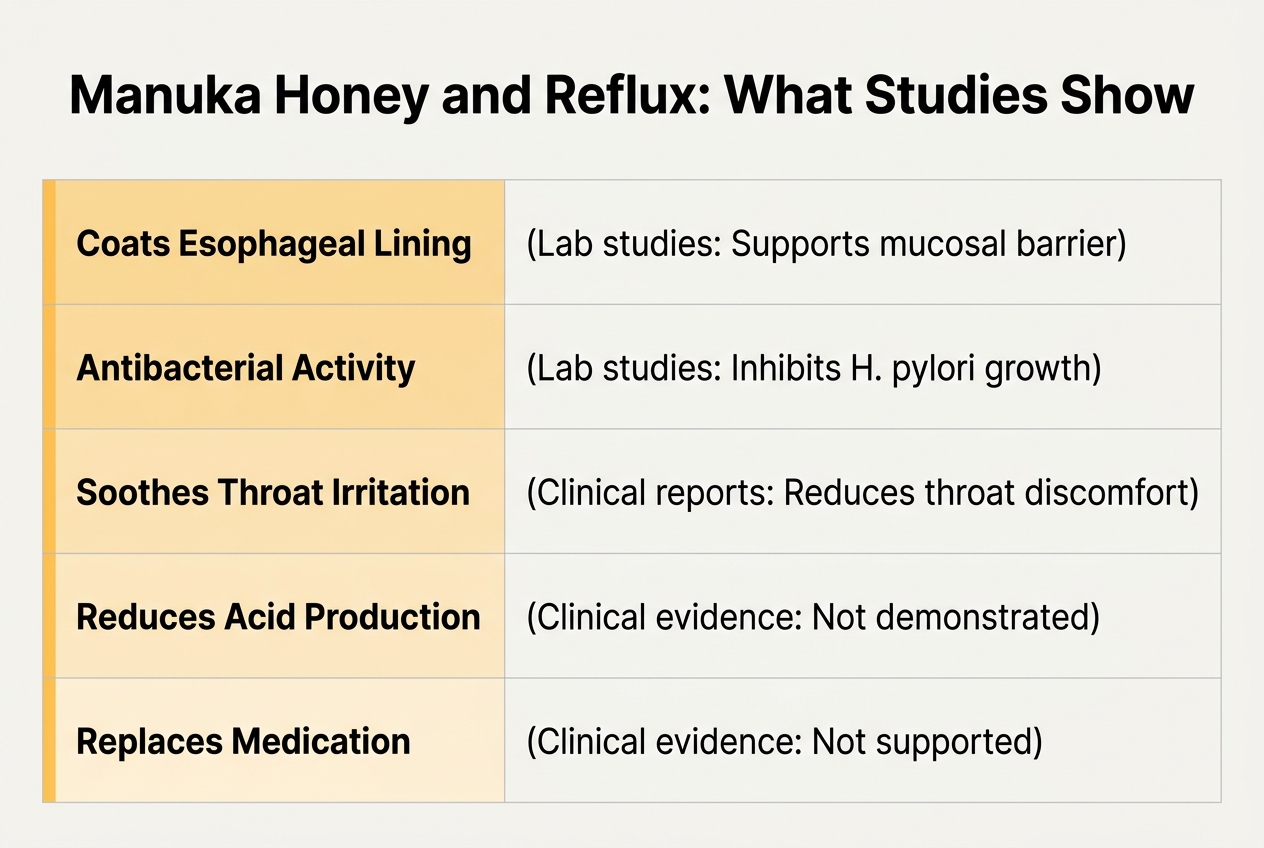
Researchers have taken a real interest in whether this antibacterial punch extends to the gut, particularly around H. pylori, the bacteria linked to ulcers and some reflux symptoms. Some lab studies show manuka honey inhibiting bacterial growth in a petri dish. That's promising, sure. But a petri dish isn't your stomach, and the leap from lab result to clinical proof isn't settled yet.
There's also early interest in honey's effect on esophageal irritation, the raw, inflamed feeling that comes with chronic acid exposure. If you want the deeper chemistry on how manuka's compounds stack up against standard raw honey, it helps to compare manuka honey against raw varieties side by side before deciding which one fits your situation. The science is encouraging, not conclusive — and that distinction matters a lot here.
Soothing vs. Curing: Setting Realistic Expectations
Here's the honest takeaway: manuka honey's best-documented benefit is soothing, not curing. Its thick texture coats the throat and esophageal lining, which can ease that raw, burning sensation after a reflux flare. That's a mechanical effect, basically a protective film, and it's far better supported than any claim about reversing reflux disease itself.
Results vary person to person, too. Some people swear by a spoonful before bed; others notice nothing. Severity, diet, and the underlying cause of your reflux all play a role, and that variability shows up constantly in anecdotal reports. Worth noting: a jiu-jitsu practitioner's steady climb through belt ranks offers a useful parallel for setting expectations. A gradual, incremental guide to the BJJ belt timeline makes clear that progress takes time and consistency, not a single dramatic fix. The same patience applies to any natural remedy.
Treat manuka honey as a complementary habit, something you layer alongside medical guidance, not a replacement for it. If symptoms are frequent or severe, see a doctor. Quality matters too: raw, third-party lab-verified manuka honey ensures the MGO number on the label actually reflects what's in the jar, rather than an inflated marketing claim with nothing to back it up.
How to Use Manuka Honey for Reflux Symptoms
Best Times to Take It
Timing matters more than people think. A small spoonful, about 1 teaspoon, taken 20-30 minutes before a meal gives it a head start on coating the esophagus before food and stomach acid show up. Taking it at bedtime works too, especially if lying down tends to trigger that burning feeling. Either way, let it sit on its own.
Don't stir it into tea or coffee. Heat breaks down the raw enzymes and some of the compounds that make unprocessed honey worth using in the first place. If you want to understand the mechanics better, it helps to read up on how to take royal jelly, since the same heat-sensitivity rules apply across raw bee products. Eat it plain, off the spoon, at room temperature.
Dosage Considerations by MGO Strength
Not all Manuka is used the same way. MGO (methylglyoxal) measures potency, and higher numbers aren't automatically better for everyday use. A few practical guidelines:
- Use a lower MGO grade, something in the mid-range rather than the ceiling, for daily, ongoing use so you're not overdoing potency you don't need.
- Save higher MGO honey, 263+ or above, for occasional, targeted flare-ups rather than routine spoonfuls.
- Track your symptoms over a 1-2 week window and take note of whether frequency or severity actually changes.
- Stop immediately if symptoms get worse, since honey isn't meant to mask a problem that's escalating.
- Pair it with smaller, more frequent meals instead of large ones that put pressure on the stomach.
- Stay upright for a couple hours after eating rather than heading straight for the couch or bed.
None of this replaces a diagnosis. It's a habit, not a cure. Used consistently and sensibly, though, it's a low-risk addition to a reflux routine that's already working in other ways.
Manuka Honey vs. Other Raw Honey Varieties for Digestive Comfort
Comparing MGO and Flavor Profiles
Not every raw honey works the same way once it hits an irritated esophagus. MGO (methylglyoxal) is the compound researchers tend to measure when studying honey's effect on digestive tissue, and manuka consistently tests higher for it than clover, wildflower, or citrus honeys sold in most grocery aisles. That's part of why a published study on Application of Manuka honey in treatment patients with GERD focused specifically on manuka rather than a generic honey blend. But MGO isn't the only thing that matters. Taste, texture, and what you can actually stomach eating before bed count too. Here's how the common varieties stack up.
| Honey Variety | Typical MGO Level | Flavor Intensity | Best For |
|---|---|---|---|
| Manuka Honey | 263+ to 514+ | Strong, earthy, slightly bitter | Those prioritizing documented potency |
| Jarrah Honey | Moderate, naturally occurring | Caramel-like, mellow | Manuka alternative with milder taste |
| Orange Blossom Honey | Low | Light, floral, mild | Sensitive palates, daily use |
| Buckwheat Honey | Low, but high in antioxidants | Robust, molasses-like | Antioxidant focus, not bedtime sipping |
Choosing Based on Taste Tolerance
Here's the honest truth: the most potent honey doesn't help you if it sits untouched in the cupboard. Manuka's thick, almost medicinal flavor is a dealbreaker for some people, especially kids or anyone used to sweeter table honey. Orange Blossom Honey is the easier entry point, mild enough to stir into tea without a fight. Buckwheat brings serious antioxidant value but its heavy, bitter edge makes it a tough sell right before bed, when reflux sufferers usually want relief. Jarrah splits the difference, offering natural antibacterial compounds in a softer package.
Whichever variety you land on, raw and unfiltered beats heat-processed every time. Commercial honey is often pasteurized and stripped of the enzymes and pollen that give raw honey its edge, leaving behind something closer to flavored sugar syrup. If taste tolerance is the deciding factor, sampling a smaller jar of each variety before committing to a larger order makes practical sense.

Risks, Precautions, and Who Should Avoid Honey-Based Remedies
Honey feels harmless because it's natural. But "natural" isn't the same as "safe for everyone." Before you spoon any honey into your routine for reflux, it's worth knowing exactly who should think twice — and when a jar of honey is no substitute for actual medical care.
Who Should Be Cautious
A few groups need to pause before trying this remedy, and the reasons aren't minor. Safety comes first, so run through this list honestly before you start:
- Infants under 12 months should never be given honey in any form, since their digestive systems can't fight off the Clostridium botulinum spores it may carry, risking infant botulism.
- People managing diabetes or insulin resistance should check blood sugar response carefully, because even raw, unprocessed honey is still a concentrated source of fructose and glucose.
- Anyone with a known allergy to bee products should avoid manuka honey, propolis powder, and royal jelly entirely, as reactions can range from mild swelling to serious anaphylaxis.
- People on blood sugar or blood pressure medications should mention honey use to their doctor, since regular intake in larger amounts can subtly shift lab results over time.
- Anyone prone to cavities or already managing gum disease should limit frequency, because honey's sugar content feeds oral bacteria just like any other sweetener does.
- Those watching their weight should treat a spoonful as a snack, not a free pass, since habitual daily servings add up in calories quickly.
When to See a Doctor Instead
Honey is a comfort measure, not a treatment plan. If you have chronic GERD, don't swap out prescribed medication for home remedies without talking to a physician first — untreated acid reflux can damage the esophagus over time. One resource on whether honey actually works for acid reflux is useful background, but it's not a diagnosis. See a doctor if symptoms persist past two weeks, if you're losing weight unintentionally, or if swallowing feels painful. Those are signs honey alone won't fix.
Other Natural and Medical Approaches to Acid Reflux
Lifestyle and Dietary Adjustments
Before you reach for any remedy, doctors usually start somewhere simpler. Cutting back on caffeine, alcohol, and fatty or fried foods is still the first-line recommendation for reflux, and it's boring advice precisely because it works. Coffee and wine relax the lower esophageal sphincter, the muscle keeping stomach acid where it belongs. A greasy meal slows digestion and gives acid more time to creep upward.
Timing matters just as much as content. Eating your last meal three hours before bed, and raising the head of your bed six to eight inches, both reduce nighttime reflux significantly. Gravity is doing real work here, not just folk wisdom. Lying flat right after a big dinner is basically an invitation for acid to travel.
Smaller, more frequent meals help too, as does cutting portion sizes at dinner. None of this is glamorous. But patients who make these changes consistently often need less medication overall, which is reason enough to try them first.
Where Bee Products Fit Among Other Options
When lifestyle changes aren't enough, over-the-counter antacids and H2 blockers are the next standard step for moderate symptoms. They neutralize or reduce acid production and work within minutes to hours. For chronic or severe GERD, prescription proton pump inhibitors are the stronger option, used under medical supervision because long-term use carries its own risks worth discussing with a doctor.
Bee products occupy a different lane entirely. Propolis powder is sometimes explored for general immune and digestive wellness, not as a direct reflux treatment, and it's worth being honest about that distinction. Nobody should swap a prescribed PPI for a spray and call it even. An alcohol-free propolis spray or raw propolis powder can be a reasonable addition to a wellness routine, particularly for people avoiding ethanol-based tinctures, but it's a supporting player, not a substitute.
Think of it this way: medication manages the acid, lifestyle changes reduce the triggers, and raw bee products sit alongside both as general wellness support, not a prescription replacement. Used with realistic expectations, they can complement a broader plan without pretending to be more than they are.
Choosing a Trustworthy Manuka Honey for Reflux
Not all jars labeled "manuka" are equal. Some lean on a UMF sticker alone, with no backup data in sight. That's not proof, it's marketing. Before you trust a honey enough to eat it straight for reflux, you want actual numbers behind the claim.
What Lab Testing and MGO Ratings Actually Confirm
A real MGO number comes from independent lab testing, not just a brand's say-so. Testing confirms the methylglyoxal level, checks for purity, and rules out synthetic additives or dilution with cheaper syrups. Raw, unheated, unfiltered honey also matters here — heat processing can degrade the very enzymes and compounds people seek manuka out for in the first place. Traceability from hive location to harvest date adds one more layer of confidence that the batch wasn't blended or stretched with filler honey.
| What to Check | Why It Matters | Red Flag |
|---|---|---|
| Third-party MGO lab test | Confirms actual potency, not a marketing claim | Only a UMF logo, no lab certificate |
| Raw, unheated, unfiltered status | Preserves natural enzymes and pollen | "Pasteurized" or "processed" on the label |
| Hive-to-harvest traceability | Shows the honey wasn't blended or adulterated | No origin, harvest date, or batch number listed |
| Testing frequency | Confirms consistency across batches over time | One old certificate, never updated |
One example worth noting: manuka honey rated MGO 263+/514+ and lab-tested every six months for purity and synthetic additives sets a fair benchmark for what to expect elsewhere.
Building a Raw Honey Routine Beyond Manuka
Manuka doesn't have to be an everyday habit. It's potent, it's pricier, and a gentler daily honey works fine between reflux flare-ups. Orange Blossom and Jarrah both offer a milder raw option for regular use. If you're curious, build a small sampler of Manuka, Jarrah, Orange Blossom, and Raw Honeycomb — many retailers offer free shipping once you cross $99, which makes testing a few varieties side by side an easy call.
If you've been curious about trying manuka honey for reflux, a little kitchen experimentation can go a long way toward finding what settles your stomach best, and paying attention to how your body responds is more useful than any general rule. Sourcing a jar of raw manuka, like the kind Go Honey carries, is a reasonable starting point if you want something unheated and true to its floral origin. From there, it's simply a matter of noticing what feels right and adjusting as you go.


