

Raw Unfiltered Honey: What It Is and Why It's Worth Buying
Aug 27, 2026
Supermarket shelves are packed with "pure honey" labels that mean almost nothing once you check the fine print. Most of it's been heated, filtered, and stripped of the very enzymes, pollen, and antioxidants you're paying for. That's the real problem: telling authentic raw unfiltered honey apart from clever marketing. This guide breaks down purity testing, sourcing standards, and practical buying criteria so you can shop with confidence, whatever brought you here.
What Is Raw Unfiltered Honey, Exactly?
Raw vs. Processed: The Core Differences
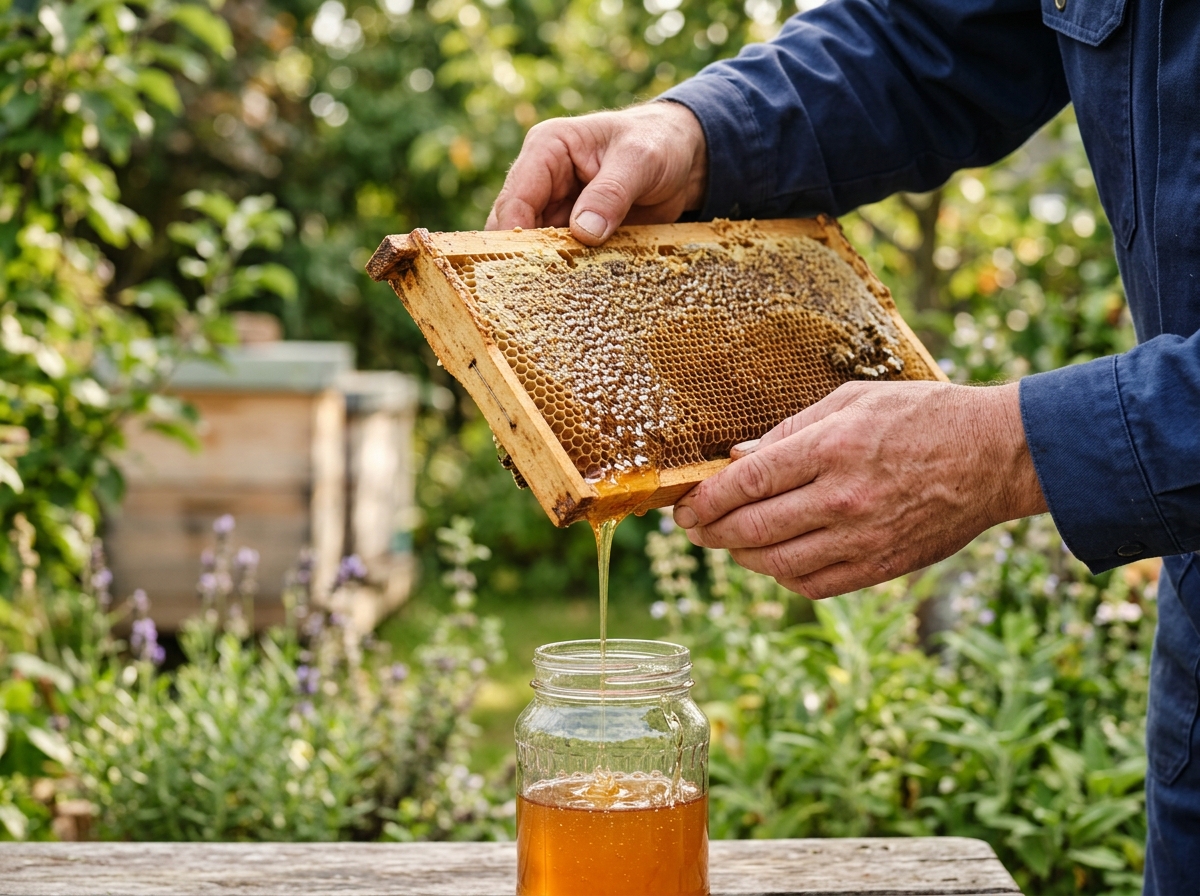
Here's the confusion in one sentence: "raw," "organic," and "pure" are not the same claim, and labels love to blur them. Raw means never heated above hive temperature (around 95°F) and never microfiltered, so pollen, tiny wax flecks, and propolis bits stay in the jar. "Organic" is about how the bees were kept and what's nearby. "Pure" just means nothing was added — sugar syrup, corn syrup, or flavoring. Honey can be pure and still be pasteurized to death. That's the trap most shoppers fall into.
Supermarket honey is almost always heated and ultra-filtered, mainly for looks. Clear, syrupy, never-cloudy honey sells better on a shelf, even though that clarity comes at a cost: heat destroys enzymes like diastase, and fine filtration strips out pollen, the very thing that gives local honey its allergy-fighting reputation. If you're researching options, learning about Raw Unfiltered Honey - Natural Enzymes & Antioxidants helps clarify what processing actually removes.
| Feature | Raw Unfiltered Honey | Standard Supermarket Honey |
|---|---|---|
| Heat exposure | Never above hive temp | Often flash-heated to 150°F+ |
| Filtration | Coarse strain only, pollen intact | Ultra-filtered, pollen removed |
| Enzymes | Active (diastase, invertase) | Largely destroyed by heat |
| Appearance | Cloudy, crystallizes over time | Clear, stays liquid indefinitely |
| Color/flavor variation | Changes by season and flower source | Standardized batch to batch |
How Crystallization Confirms Rawness
If your honey never crystallizes, be a little suspicious. Raw honey has a natural glucose-to-fructose ratio that causes it to turn grainy or solid within weeks or months, depending on the floral source. Buckwheat honey crystallizes fast; orange blossom takes longer. Cloudiness, sediment, and color shifts jar to jar aren't flaws. They're evidence. Perfectly clear honey that resists crystallization forever usually means it's been filtered and heated within an inch of its life — good for shelf appeal, bad for nutrition.
Why Health-Conscious Shoppers Are Switching to Unprocessed Honey
Enzymes, Pollen, and Antioxidants Explained
Heat is the enemy here. Commercial honey gets pasteurized at temperatures that look great on a factory line but wreck the delicate stuff inside — namely diastase and invertase, two enzymes bees add themselves to help convert nectar into honey. These enzymes support digestion and are one of the easiest markers labs use to judge quality. Once honey's heated past a certain point, that enzyme activity crashes, and it doesn't come back.
Antioxidants take a similar hit. Raw honey carries flavonoids and phenolic compounds that get diminished with every degree of processing, which is part of the reason is there a real difference between raw and regular honey keeps coming up in nutrition circles. There's real science behind the distinction, not just marketing. Unprocessed honey keeps more of what made it valuable in the first place.
Trace Pollen and Propolis: Small Amounts, Real Support
Filtration strips out pollen and tiny propolis fragments — the stuff many shoppers are actually after. These trace compounds have long been associated with seasonal wellness support, particularly when sourced locally, since the pollen reflects the same plants your body's reacting to each season. It's not a guaranteed fix. But plenty of people notice a difference when they switch from filtered supermarket honey to something closer to the comb.
Propolis itself deserves mention too. Bees produce it as a resin to seal and protect the hive, and it's packed with compounds bee researchers have studied for their antimicrobial properties. Filtered honey usually has none left. Raw, unfiltered batches often retain small amounts, which is exactly why some wellness buyers seek out propolis-based products on their own, separate from honey entirely.
Lower Glycemic Impact and Nutrient Density
Refined sugar and high-fructose syrups spike blood sugar fast, then drop you just as quickly. Raw honey, thanks to its enzyme and mineral content, tends to digest more slowly, producing a gentler glycemic response for many people — not a free pass for diabetics, but a meaningful difference for everyday snacking. That's a distinction worth sitting with for a second.
This is really the bigger shift happening: people are stopping treating honey as just a sweetener. It's got trace B vitamins, amino acids, and minerals like manganese and zinc that sugar simply doesn't carry. Some naturopathy fans even compare notes on royal jelly the same way, since royal jelly is not for the taste so much as the nutrient payload it delivers. Think of honey as a functional food that happens to taste sweet, not the other way around.
How to Verify Purity: Lab Testing and Traceability Standards
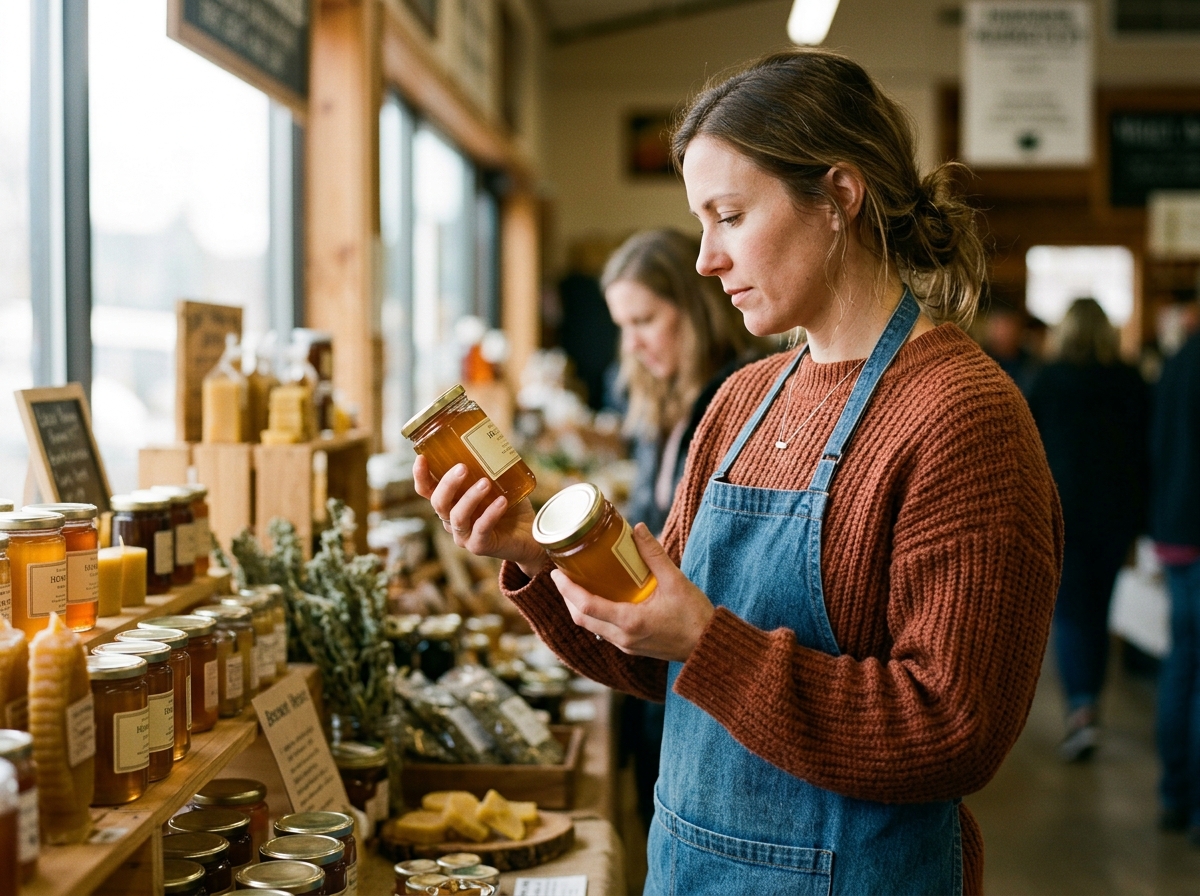
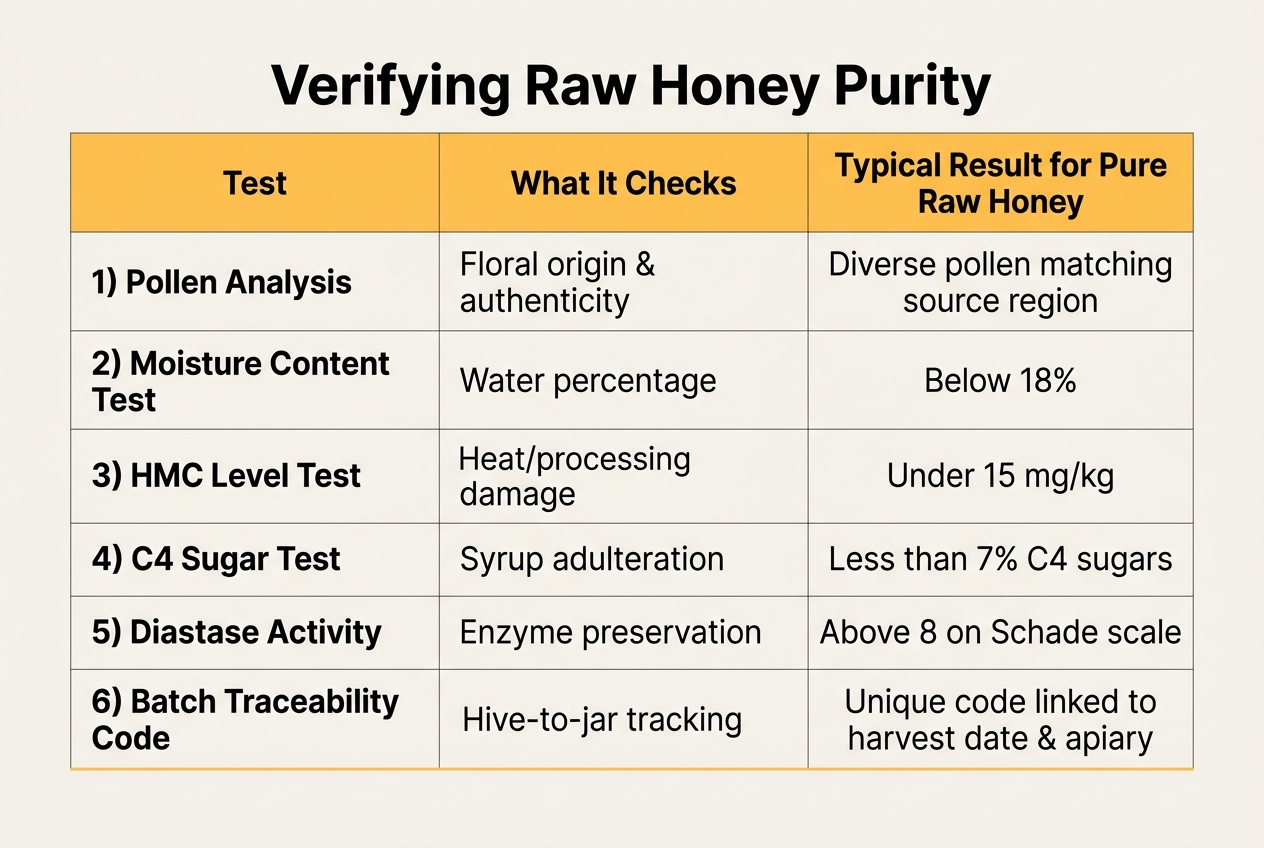
Anyone can print "raw" on a label. That word means nothing without paperwork behind it. Real purity claims should be backed by independent lab testing, not just a farm's word, and the results should be recent enough to reflect what's actually in the jar you're holding.
What a Real Lab Certificate Should Show
A legitimate certificate of analysis isn't a vague "quality checked" sticker. It's a document you can request and read for yourself. Before buying, especially in bulk, look for these details on the report:
- Confirmation of no detectable glyphosate or other pesticide residue, since herbicide drift is one of the most common contaminants found in commercial honey supplies today.
- Testing for adulteration with corn syrup, rice syrup, or other cheap sugar sources used to stretch real honey and cut costs.
- A specific harvest date and hive location, tying the batch to an actual farm rather than a generic "product of multiple countries" label.
- Measured 10-HDA percentage for royal jelly products, which indicates potency and freshness rather than just a marketing claim.
- A testing date within the last six months, since pollen sources and nutrient levels shift with the seasons and old data won't reflect the current batch.
If a business can't produce this kind of certificate on request, that's a real problem, not an oversight.
Common Adulteration Tricks to Watch For
Cut honey is easy to miss if you're only looking at the jar. Watch for texture that's suspiciously clear and runny with none of the cloudiness raw honey naturally has, pricing far below what small-batch beekeeping actually costs to produce, and sourcing language like "blended from several countries" instead of a named farm. If you want a quick visual gut check before you ever read a label, this comparison of grocery-store options is worth watching, since it breaks down exactly what shoppers miss in the aisle. It's also smart to research a bee farm in warm sunny southern California to see what transparent sourcing actually looks like in practice, down to hive photos and harvest logs. Vague sourcing is the biggest tell. Honest farms name their location.
Choosing Among Honey Varietals and Bee Products
Not all honey tastes the same, and it shouldn't. Flavor and texture depend entirely on which flowers the bees visited, and that changes what each jar is best used for. Orange Blossom honey is light, floral, and mild — a good starting point if you're new to raw honey and want something that won't overpower tea or yogurt. Buckwheat honey swings the other way: dark, molasses-like, and rich in antioxidants, favored by folks using it for cough relief or hearty baking. Jarrah honey, sourced from Western Australian eucalyptus trees, brings an earthy, caramel-like depth. Manuka honey stands apart because of its measurable MGO content, which drives its reputation for wound care and gut support. Raw honeycomb, meanwhile, is the purist's choice — nothing removed, nothing added, just wax and honey as the hive made it.
Honey Varietal Comparison Chart
Here's a quick side-by-side to help you match the honey to the purpose, whether that's a morning spoonful or a recipe swap.
| Varietal | Flavor Profile | Typical Use |
|---|---|---|
| Orange Blossom | Light, floral, mildly sweet | Tea, yogurt, everyday sweetening |
| Buckwheat | Dark, robust, molasses-like | Cough relief, hearty baking |
| Jarrah | Earthy, caramel, slightly bitter finish | Culinary depth, antioxidant-rich diets |
| Manuka | Thick, medicinal, mineral-forward | Wound care, digestive support |
| Raw Honeycomb | Waxy texture, unrefined sweetness | Snacking, minimal-processing purists |
Royal Jelly and Propolis: When to Choose Which
Royal jelly and propolis solve different problems, so pick based on what you actually need. Fresh royal jelly, kept refrigerated, delivers potent 10-HDA levels and works well if you're consistent about taking small daily doses. If you travel often or hate the sharp, sour taste, freeze-dried royal jelly powder offers a shelf-stable, concentrated alternative you can stir into smoothies. For anyone comparing options, looking into raw honey sold in various jar sizes can also clarify how packaging and freshness intersect. Propolis, on the other hand, is about immune defense rather than hormonal or energy support. Powder suits DIY skincare blends, while an alcohol-free tincture spray is the practical pick for kids or anyone avoiding alcohol-based extracts entirely.
Everyday Uses: Kitchen, Wellness, and Skincare
Cooking and Serving Tips That Preserve Nutrients
Heat is the enemy here. The whole point of buying unheated honey is to keep its enzymes and pollen intact, so the way you use it matters as much as the honey itself. A drizzle over a sharp cheese board, stirred into overnight oats, or swapped for sugar in baking (roughly 3/4 cup honey per cup of sugar, with liquids reduced slightly) all work well. Tea is the tricky one — water above 110°F starts breaking down enzymes, so let your brew cool a bit before sweetening. Anyone comparison-shopping online will notice how many products marketed as raw unfiltered honey vary wildly in texture and crystallization, which is a normal sign of minimal processing, not a flaw.
Beyond the kitchen table, raw bee products show up in a few specific wellness routines worth knowing about:
- Local raw honeycomb is a traditional approach many parents explore for seasonal allergy support, based on the idea that trace local pollen may help the body adjust over time.
- Royal jelly gets stirred into morning smoothies or taken straight off a spoon by people chasing steadier energy and immune support without caffeine crashes.
- Propolis powder mixed into a clay mask gives skincare DIYers an antioxidant boost, though it should be patch-tested first since it can be potent.
- Honey-based sugar scrubs, blended cold rather than melted, hold onto more of the honey's natural humectant properties for softer skin.
- Freeze-dried royal jelly powder dissolves into cold liquids for those who can't stomach the fresh version's sharp, tangy taste.
Verdict: if a recipe calls for boiling your honey, you're just making expensive sugar syrup. Keep it cold, keep it simple, and the benefits stay put.
Sourcing Sustainably: What Ethical Beekeeping Looks Like
Questions to Ask a Honey Producer Before Buying
Start with the hive itself. Ask how the bees are managed and whether the apiary uses synthetic pesticides, miticides, or antibiotics on a routine basis. Pesticide-free hive management isn't just a marketing phrase — it means the farmer is treating pests through natural methods like screened bottom boards or resistant bee genetics rather than chemical shortcuts. A good producer will tell you exactly what's used, and won't dodge the question.
Next, ask about scale. A family-run operation with a few hundred hives behaves very differently than an industrial supplier moving millions of pounds a year. Smaller farms can rotate hive locations, avoid overharvesting, and leave enough honey behind for the colony to winter on. That's a far cry from operations that strip hives bare and prop bees up on sugar syrup instead. Bulk buyers sourcing for retail should weigh this heavily, since it affects both quality and consistency batch to batch.
Then think about your own footprint. Buying from regional beekeepers keeps pollination happening locally, which supports wild plant diversity and nearby crop yields, not just honey output. It's a small choice with a bigger ripple effect than most shoppers realize. Finally, ask about the supply chain: how many hands touch the honey between hive and jar? Farm-direct sales cut out blending facilities and importers, which lowers the odds of adulteration with rice syrup or other cheap fillers. If you want a benchmark for what unblended, single-source honey looks like on the shelf, the labeling on a product like oz Raw and Unfilter 100% Organic Honey in PET bottle shows the kind of transparency worth expecting. Ask for it. If a producer can't answer these basics, that tells you something too.
Buying Guide: Storage, Wholesale, and Frequently Asked Questions
Storage Best Practices
Keep raw honey at room temperature, away from direct sunlight, and it'll stay stable for years. Don't refrigerate it. Cold temperatures actually speed up crystallization, turning smooth honey grainy or solid. That's not spoilage, and it's not a defect either. It's just glucose separating from water naturally. A warm water bath, jar sealed, heat kept gentle, will bring it right back to liquid without damaging the enzymes you're paying for.
Shipping matters more than most buyers realize. Honey and royal jelly are sensitive to heat and jostling in transit, which is why expedited delivery, ideally two-day service with a Saturday option, protects quality far better than standard ground shipping. At Go Honey, orders over $84 ship free by two-day express.
FAQs Answered
Wholesale buyers face different questions than home users: packaging formats, private labeling, and whether lab documentation stays consistent shipment to shipment. If you're comparing sourcing options, understanding the difference between raw, pure, and organic labeling will help you evaluate suppliers before signing a contract. Ask every supplier for a current certificate of analysis, not a one-time test from three years ago.
| Question | Short Answer |
|---|---|
| Is raw honey safe for infants? | No. Never give honey to children under 12 months due to botulism spore risk. |
| How long does it last? | Indefinitely if sealed and stored properly; crystallization doesn't mean it's expired. |
| Can diabetics eat it? | In small amounts, with a doctor's guidance; it still raises blood sugar. |
| Does freezing damage royal jelly? | Freezing preserves potency; repeated thaw-refreeze cycles degrade 10-HDA content. |
| What's the ideal bulk packaging? | Food-grade pails or private-label jars, depending on retailer volume and shelf format. |
One verdict worth remembering: if a wholesale supplier can't produce a lab document on request, walk away. Consistent, dated testing is the entire point of buying raw. For retailers, private labeling only works if the underlying product quality never wavers between batches, so ask suppliers how often they retest and whether results are shared proactively or only when questioned.
Before you commit to a hive rental contract, it's worth sitting with the details that matter most: how many colonies your acreage actually needs, when bloom is likely to peak, whether the beekeeper's hives will arrive strong enough to forage in cool weather, and what the agreement says about frame counts, inspections, and spray windows. A good pollination partner will talk openly about all of it, and the questions you ask in February tend to shape what you harvest in fall. And if your interest in bees leans more toward the pantry than the orchard — raw varietal honeys, honeycomb, royal jelly, propolis — that's a separate conversation entirely, one where sourcing and freshness are the things worth weighing.


