

Manuka Honey Cough Drops vs Raw Honey: What Soothes Best?
Oct 06, 2026
Your throat's raw, the cough won't quit, and the drugstore aisle is a wall of confusing options promising relief. Manuka honey cough drops have become the go-to pick for anyone tired of synthetic lozenges, but do they actually outperform raw honey, propolis, or other time-tested remedies? Not always. This deep dive breaks down what truly soothes a cough in 2026, and where raw, single-source honey and bee products fit into a cleaner, more effective recovery routine.
Manuka honey cough drops vs. regular menthol lozenges: what's really different
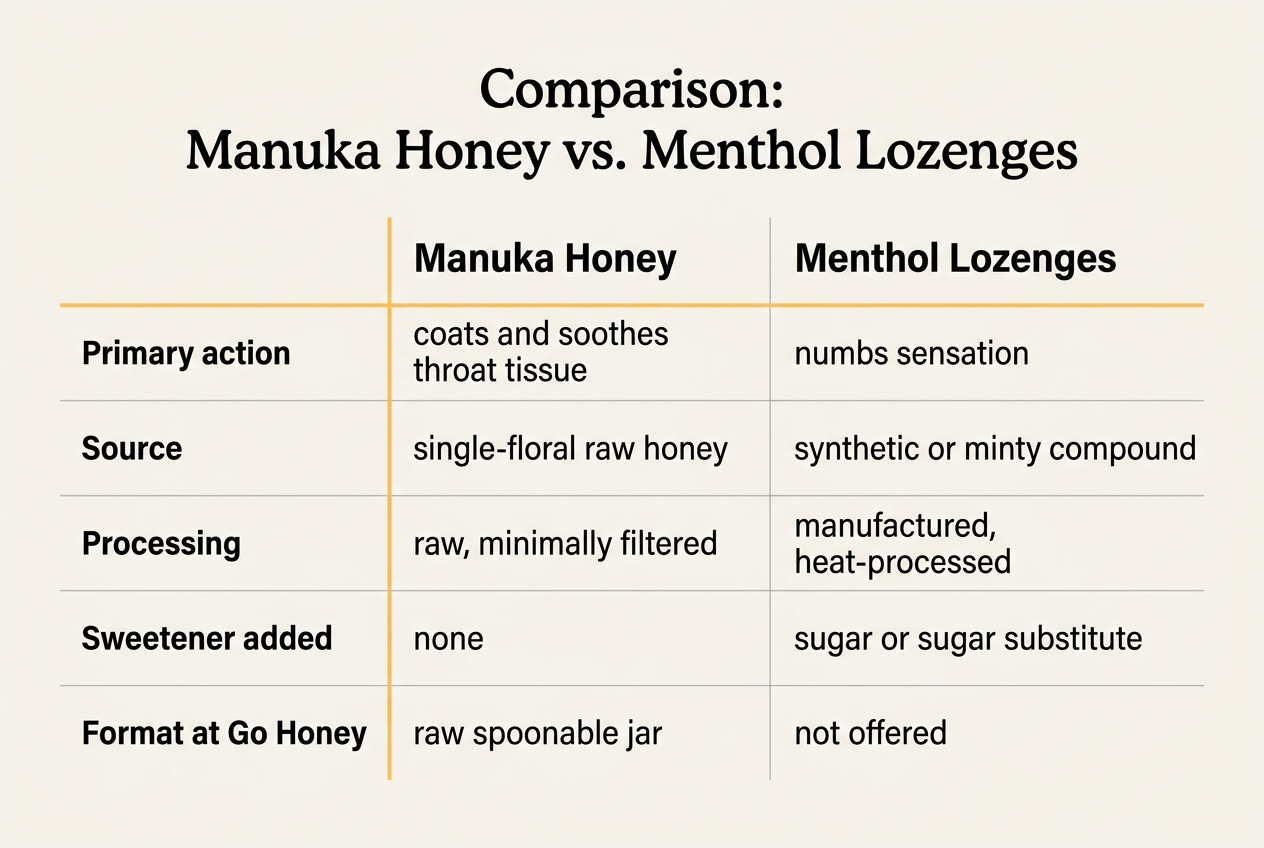
Here's the basic split. Menthol lozenges work through a numbing trick — menthol and eucalyptus oils trick cold receptors in your throat, so the scratchy feeling fades for a bit. There's no bioactive compound doing repair work, just a cooling sensation. Manuka cough drops take a different approach: they're built on commercial-grade manuka honey, usually cut with cane sugar, which coats the throat while carrying trace amounts of MGO (methylglyoxal), the antibacterial marker that makes manuka honey distinct in the first place.
How lozenge manufacturing affects raw honey's natural enzymes
Cooking honey into a hard candy means heating it past the point where its natural enzymes survive. Heat is the enemy of raw honey's potency. Enzymes like glucose oxidase break down well before the sugar reaches hard-crack stage, and the same heat that hardens a lozenge also degrades a portion of its MGO content. Spoonable raw manuka honey, kept unheated, holds onto both. It's a tradeoff: convenience and shelf life versus bioactivity. Neither is wrong — they're just solving different problems.
Reading MGO numbers on a drop label vs. a honey jar
A raw honey jar usually lists MGO as a standalone rating — 100+, 263+, 500+ — tested on the honey itself. A lozenge label is murkier, because the MGO figure (if listed at all) often describes the manuka honey used before blending, not the diluted dose in each drop. Many packaged "manuka" drops lean on low-grade honey stretched with sugar syrup, so the actual manuka content per piece can be small. Worth learning the difference before assuming a drop matches a jar; a closer look at manuka honey vs raw honey lays out how grading actually works.
| Feature | Menthol lozenge | Manuka cough drop | Raw spoonable manuka honey |
|---|---|---|---|
| Active mechanism | Menthol/eucalyptus cooling | Honey coating + trace MGO | Full MGO potency + enzymes |
| Heat exposure | High (candy-making) | High (candy-making) | None |
| Sugar content | Mostly sugar/corn syrup | Often cut with cane sugar | Honey only, unblended |
| MGO transparency | Not applicable | Often unclear per-dose | Labeled directly on jar |
| Shelf stability | High | High | Moderate, needs sealing |
So which wins on paper? Depends what you're after. If it's pure numbing relief, menthol does its job fine. If it's bioactive compounds doing more than masking a symptom, the label math favors raw honey eaten straight.
Manuka vs. other raw honey varietals for soothing a cough
When to reach for high-MGO manuka vs. a milder varietal
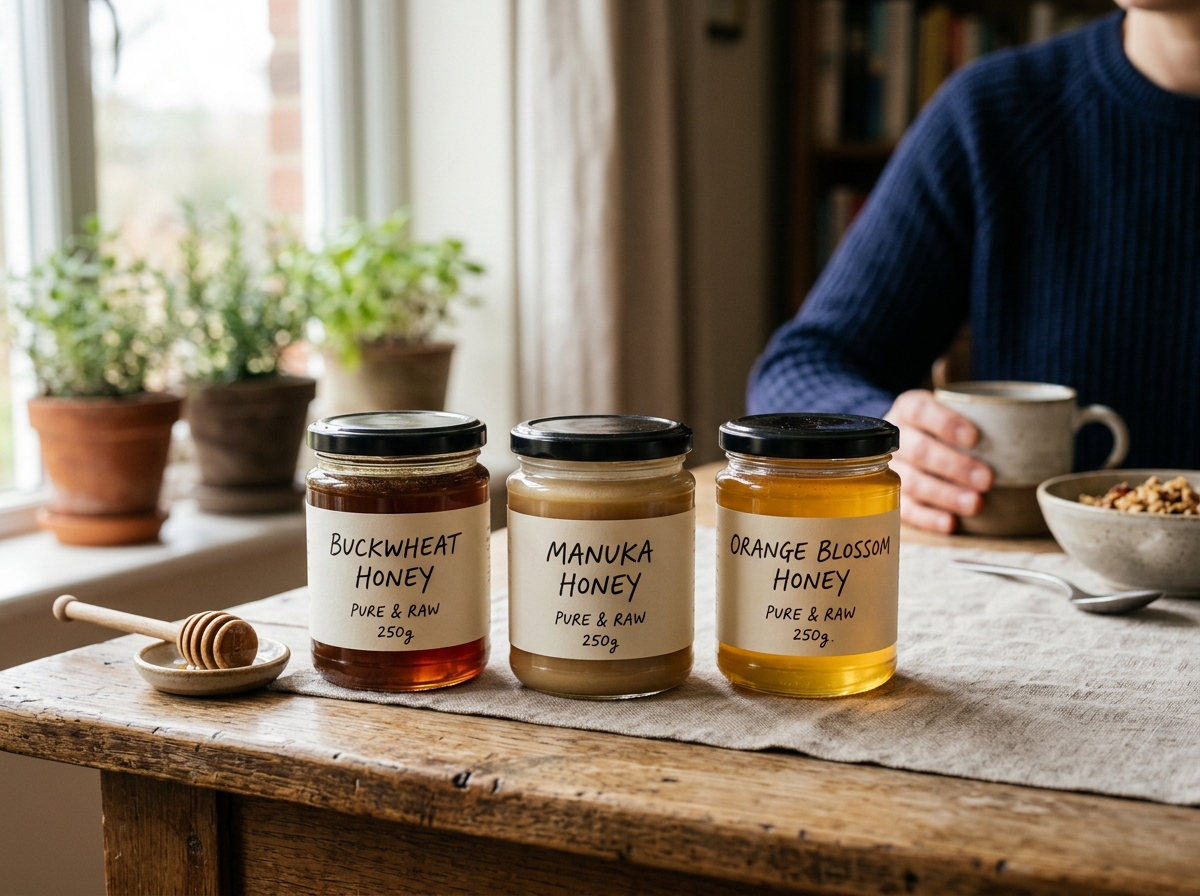
Manuka's whole reputation rests on one number: MGO, or methylglyoxal. It's the compound responsible for manuka's antibacterial punch, and it's the reason labels list ratings like 263+ or 514+ rather than vague marketing claims. If you're dealing with a nasty, lingering cough and want measurable potency behind your spoonful, high-MGO manuka is the logical pick. It's not magic. But it is the one varietal with lab numbers to back up the hype.
Not every cough needs that much firepower, though. Sometimes you just want something soothing that won't taste medicinal. That's where a lighter option earns its place — premium 100 pure orange blossom honey has a delicate, almost citrus-blossom sweetness that coats the throat just as well, minus manuka's assertive, almost earthy bite. It's a good call for kids, or for anyone who finds manuka too strong to stomach nightly.
So which do you actually grab off the shelf? Honestly, it depends on what you're treating and who's drinking it. A short, scratchy throat from dry winter air doesn't need 500+ MGO. A rough, days-long cough might make you glad you have it.
Darker, mineral-rich, and antioxidant alternatives worth knowing
Buckwheat honey looks almost like molasses next to lighter varietals, and that darkness isn't cosmetic. It's packed with minerals and has a robust, malty intensity that's shown up in folk cough remedies for generations, long before anyone was measuring MGO. People reach for it when they want something that feels substantial going down, not just sweet. Think of it as the honey equivalent of a strong black tea: bold, a little bitter, undeniably effective at coating a raw throat. This bold, malty character comes straight from the buckwheat blossom itself — nothing added, nothing blended in.
Jarrah honey is the quieter alternative most people haven't heard of. It's a rare varietal from Western Australia, prized for a natural antioxidant profile that rivals manuka's without the methylglyoxal marketing machine behind it. It brings its own caramel-toned depth to a cup of tea, and for people who want manuka-style throat comfort without manuka's price tag or intensity, it's a reasonable swap worth trying. That caramel note is simply what Jarrah blossoms produce — one more case where flavor variety comes from the source, not the recipe.
None of these honeys is objectively "better" than another — that's not really how this works. Choosing comes down to taste, desired potency, and what you're treating. A sore throat from a cold responds to all of them reasonably well; a stubborn, bacterial-feeling cough is where people tend to lean on manuka's higher MGO numbers specifically. For what it's worth, the same logic that applies to building any skill set — learning foundational technique before chasing advanced moves — applies here too: understand what each honey actually offers before assuming stronger automatically means better for your situation.
Hard lozenge vs. raw spoonable honey: pros and cons for soothing a sore throat
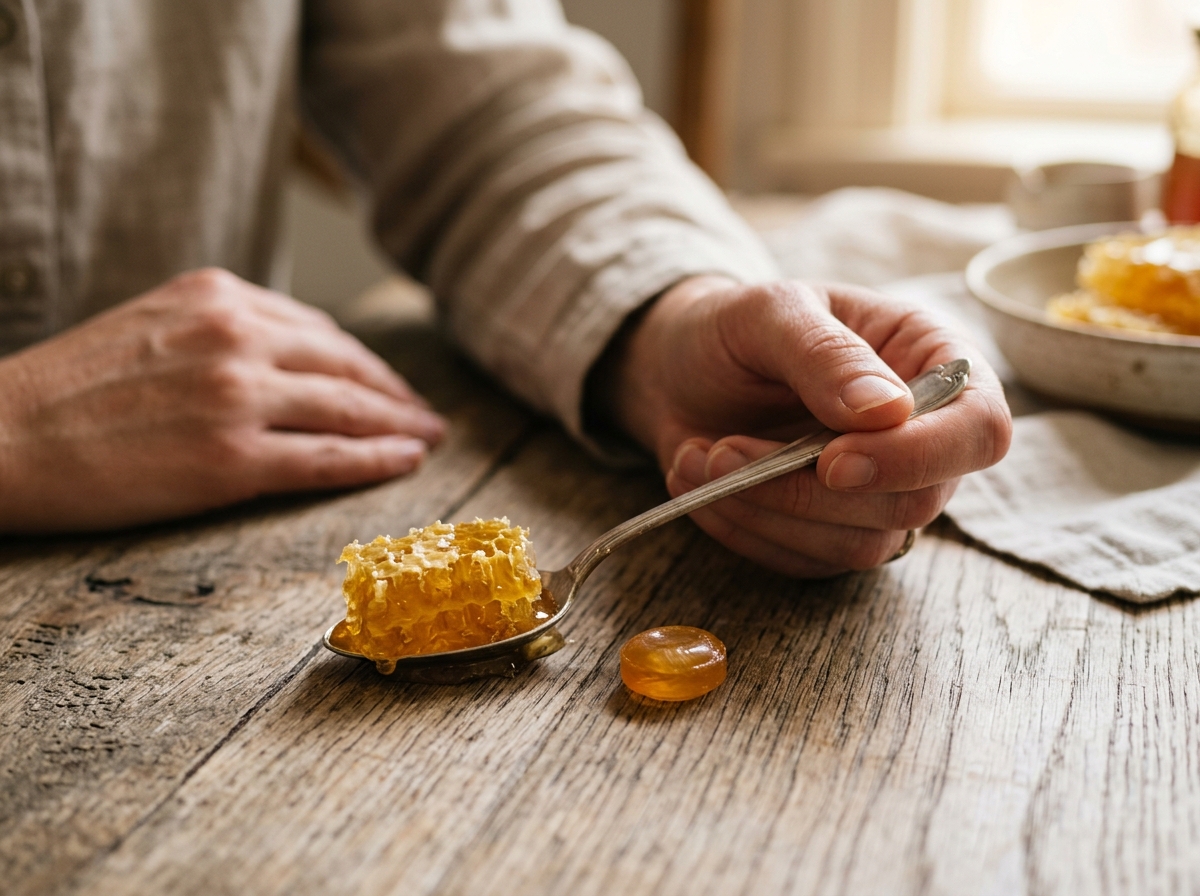
Both formats soothe a scratchy throat, but they solve different problems. A lozenge rides in your pocket and gets dosed the same way every time. A spoonful of raw honey doesn't travel well, but it keeps everything the hive put into it. Neither is wrong — it depends on where you are and what you're trying to avoid.
Best use-case scenarios for each format
Lozenges earn their keep at the office, in a classroom, or on a long flight. They dissolve slowly, coating the throat for ten to fifteen minutes without a spoon or napkin in sight. Raw honey works better at home: stirred into warm tea before bed, or taken straight off a spoon when you've got five quiet minutes. One is built for motion, the other for stillness. That's really the whole decision.
| Factor | Hard lozenge | Raw spoonable honey |
|---|---|---|
| Portability | Pocket-ready, no mess | Needs a jar and spoon |
| Dosing | Pre-measured per piece | Variable, by taste |
| Added ingredients | Often cane sugar, corn syrup, flavoring | None, if truly raw |
| Best timing | Daytime, work or school | Evening, tea, or before bed |
| Heat tolerance | Stable in a bag or car | Should avoid extreme heat |
What ingredient labels reveal about hidden sugars
Flip a lozenge bag over and you'll usually find cane sugar or corn syrup listed before anything resembling actual honey. Some add citric acid or artificial flavoring just to carry the taste. Raw honey, by contrast, is a one-ingredient food: no fillers, no syrup base, nothing to dilute its natural enzymes or pollen content. Raw, unfiltered honey and honeycomb naturally retain pollen traces, which is worth knowing if you're also managing allergies at home. Read labels before you assume "honey" lozenges actually contain much of it.
Why some manuka cough drops add cane sugar — and whether it matters
Single-ingredient raw honey as a cleaner label alternative
Here's the thing about a hard lozenge: raw honey can't do it alone. Pure honey stays tacky and soft no matter how much you cook it down, so manufacturers lean on cane sugar (or corn syrup, or both) to get that snap-and-dissolve candy texture. Sugar also stabilizes the drop on the shelf, keeping it from going sticky in a warm glove box or a kid's backpack for months at a time. It's a manufacturing fix, not a nutrition decision.
The catch is proportion. A typical drop might list "manuka honey" second or third on the ingredient panel, trailing sugar, glucose syrup, and sometimes citric acid or flavoring. The actual manuka content can be a small fraction of the drop's total weight — sometimes just enough to earn the name on the front of the bag. You're mostly eating candy with a honey accent.
Compare that to a spoonful of 100% pure raw manuka honey straight from the jar. Nothing added, nothing to dilute it — just honey, full strength. For someone trying to avoid refined sweeteners entirely, that difference isn't trivial. It's the whole point.
This is why label-readers tend to gravitate toward single-ingredient jars over candy-style panels. A parent checking what's going into a child's body doesn't want to decode five sweetener names. One word — honey — tells you everything. Wellness retailers sourcing for health-focused customers run into the same logic: a cleaner ingredient list is usually the easier sell, and it doesn't require explaining why sugar ranks above the honey it's named for.
Comparing traceability and lab testing across honey brands
Pick up a box of cough drops at the pharmacy and read the label. Most list "honey" as one ingredient among many, sourced from blended batches that cross several countries before they reach a factory. You won't find a harvest date. You won't find a hive location. That's just how mass production works — and it's exactly why purity claims deserve more scrutiny than a pretty label gives you.
What a lab certificate should actually show you
A real certificate isn't a marketing graphic. It's a document, and it should hold up to questions. Before trusting any honey brand's potency or purity claims, check that testing covers these points:
- Confirmation of purity, meaning no added syrups, fillers, or cut-rate sugars disguised as raw honey;
- MGO or 10-HDA potency numbers specific to that batch, not a brand-wide average pulled from old data;
- Screening for glyphosate residue and other synthetic pesticide traces;
- A testing date recent enough to matter — testing every six months, not once at launch and never again;
- An independent, third-party lab name you can actually verify, not an in-house claim.
If a brand can't produce that, assume the number on the jar is a guess.
Why harvest-date transparency matters for potency claims
Potency isn't fixed forever. MGO and 10-HDA levels shift with time, storage, and processing, so a harvest date tells you how fresh that potency claim really is. Full traceability — hive location, harvest date, and a matching lab certificate — lets you trace a jar back to an actual farm, not a blending facility. Pesticide-free, sustainably managed hives in Southern California and New Jersey support that chain directly: these are the farms behind the raw honey, royal jelly, and propolis sold straight to you, and healthier bees produce honey that tests cleaner, batch after batch. That's the whole point of traceability. Anything less is just a nice story on a label.
Steps for using raw manuka honey as a natural alternative to cough drops
Forget unwrapping anything. Using raw manuka this way is simple, and it works with your body's own pace instead of a timer. Start with a teaspoon straight off the spoon, letting it sit on the tongue and coat the back of the throat slowly before you swallow. That slow coating is the whole point — it's what a hard lozenge tries to mimic with sugar and wax.
If a straight spoonful feels like too much, warm liquid helps it travel further. Stir it into tea or water that's warm, not boiling, so the enzymes stay mostly intact while the irritation still gets soothed.
Combining raw honey with propolis for throat and immune support
Honey calms the throat. Propolis backs up the immune side. Together, they cover more ground than either does alone, and you don't need an alcohol-based tincture to get there. Here's a practical sequence worth trying during the first signs of a scratchy throat:
- Take a teaspoon of raw manuka honey directly, letting it sit and coat the throat before swallowing slowly;
- Follow with a few sprays of an alcohol-free propolis spray for throat and immune support without synthetic tincture bases;
- Stir a spoonful of honey into warm tea or water on alternating doses, to vary texture and keep things interesting;
- Add Royal Jelly or Freeze-Dried Royal Jelly Powder to a morning smoothie for broader, ongoing immune resilience once acute symptoms fade;
- Store the honey jar at room temperature, away from stove heat or direct sun, to protect its natural MGO and enzyme content.
How often raw honey can reasonably be used during a cold
There's no rigid dosing chart here, but a reasonable pattern is a teaspoon every three to four hours while symptoms are active, similar to how you'd space out a lozenge. Kids over one year old can usually have smaller amounts more often. The honey itself doesn't wear off — it's not medication with a half-life. Just don't overdo total sugar intake if you're using it six or seven times a day for a week straight. That's the blunt truth: it's soothing, not a cure, so pair it with rest and fluids rather than expecting it to carry the whole job.
Manuka honey cough drops vs. raw manuka honey: the final verdict
Neither format is wrong. They just solve different problems. Lozenges win on portability and pre-measured convenience — toss a tin in a backpack, a glove box, a desk drawer, and you're covered for school, travel, or a scratchy throat mid-meeting. Raw, unfiltered manuka honey wins on purity, enzyme retention, and skipping the added cane sugar or corn syrup that fillers most commercial drops. The real question is what you're optimizing for.
Which option fits which lifestyle
For families wanting traceable, lab-tested potency, a jar of 100% pure raw manuka honey rated MGO 263+ or 514+ offers a transparent alternative to boxed drops with vague "manuka-infused" labeling. Pairing that honey with an alcohol-free propolis spray covers both the soothing and immune-support angles a lozenge simply can't reach, since drops dissolve and disappear but don't build daily resilience. Here's how the two formats stack up side by side.
| Factor | Packaged lozenges | Raw manuka honey |
|---|---|---|
| Portability | Pocket-ready, no spoon needed | Needs a jar and utensil |
| Added sugars | Often present (cane sugar, syrup) | None — single ingredient |
| Enzyme activity | Lost in heating/processing | Preserved when unheated |
| Dosing precision | Fixed, pre-measured | Variable by spoonful |
| Best use case | Classroom, travel, workplace | Daily home wellness routine |
Best approach for most health-conscious households: keep raw honey on hand for daily use, and save packaged drops strictly for on-the-go moments when a spoon isn't practical. Anything marketed as "best of both" usually just means more sugar.
Where bulk or wholesale buyers should look instead
Retailers stocking shelves for a wellness shop or clinic shouldn't be choosing between lozenges and jars one unit at a time. A wholesale or bulk ordering program built around raw honey, propolis powder, and royal jelly gives shopkeepers lab-verified inventory they can speak to confidently, rather than guessing at a drop manufacturer's sourcing claims.
Before committing to pollination contracts for a farm or orchard, it's worth weighing colony strength, bloom timing, and how growers in your region typically structure rental agreements with local beekeepers. For those more curious about what comes out of a hive than what goes into a field, that's a separate question entirely, one about raw honey, royal jelly, or propolis and how those are sourced, tested, and sold in volume. Either way, the right fit depends less on what sounds appealing and more on what the actual goal is.


